
Your first canned run was fine. The second one came back from a distributor with a metallic note nobody could place, and by month six a few cans had gone soft at the neck. Neither the formula nor the co-packer changed; the product sat on a warm shelf long enough for the can liner to lose an argument with your acid load.
A can liner is the thin polymer coating that keeps your beverage from touching bare aluminum. Whether your formula needs a standard liner or an upgraded one is driven mostly by total organic acid load and sulfite level, not by pH alone and not by salt content. Get it wrong and you get dissolved aluminum in the drink, off-flavors within a few months, and eventually pinholes in the can wall.
What Is a Can Liner and Why Does Every Can Need One?
A can liner is a food-contact polymer coating applied to the interior of an aluminum can to separate the beverage from the metal. It exists because bare aluminum reacts with acids, salts and moisture, which puts aluminum into your product and eats the can from the inside.
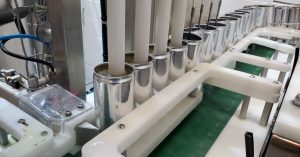
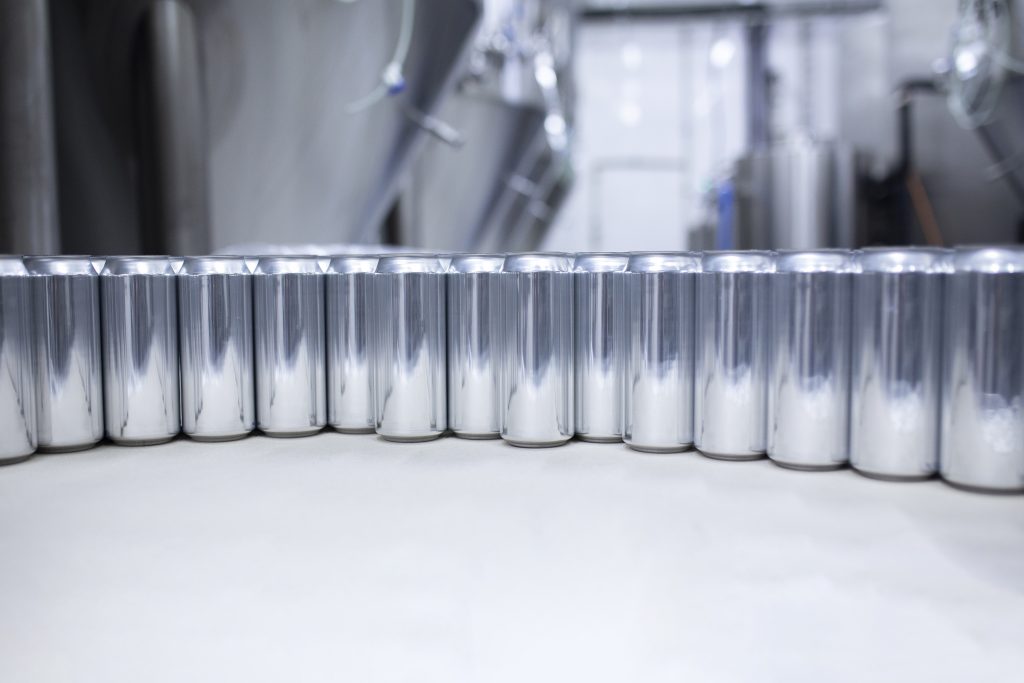
A two-piece aluminum can is drawn and ironed from coil, then the interior is spray-coated and thermally cured after forming. Ends are roller-coated on the coil before stamping, which is why can-end coatings are a separate product family from body coatings. The Food Packaging Forum reports these films typically run 5 to 12 micrometres. That is the entire barrier between your formula and the metal.
And it is not a perfect barrier. Peer-reviewed work by Aljohani and colleagues in Materials found an internal epoxy coating reduced the aluminum corrosion rate by 80 to 99 percent and raised polarization resistance by three orders of magnitude, while still failing to prevent aluminum from dissolving entirely. Attack concentrated at localized weak points in the film rather than spreading evenly. A liner slows the reaction without stopping it, and the rest of this piece is about how much slowing your formula needs.
Which Can Liner Chemistries Are Actually in Use?
There are four coating families in current commercial use, and they are not interchangeable. Knowing which one you have is the first step, and most brands do not know.
| Coating class | What it is | Where it holds up | Where it fails |
|---|---|---|---|
| Epoxy-phenolic (BPA based) | The legacy benchmark, still the reference standard in published research | Best all-round acid and sulfite resistance | BPA content is a market and label liability in many categories |
| BPA-NI epoxy (often called Gen 2) | The current mainstream non-BPA epoxy | Independently validated to perform comparably to BPA epoxy for sulfited wine and cider | The label BPA-NI names what is absent, not what is present |
| Acrylic (often called Gen 1 non-BPA) | An early non-BPA replacement, largely phased out | Adequate for water and simple soft drinks | Produced up to 1,307 micrograms per litre of hydrogen sulfide in canned wine within 8 weeks; brittle |
| Polyester | Two very different products under one word | Thick laminated polyester applied to coil before forming is the premium option for aggressive fills | Thin spray-applied polyester is weak under acidic conditions. Do not conflate the two |
aTULC, a laminated polyester system, applies film to the coil before forming rather than spraying a formed can, which gives more uniform coverage. The manufacturer claims more than double the shelf life in vulnerable categories and under 2 percent cannabinoid potency loss over 20 weeks. Those are vendor claims rather than independent findings, and they are worth testing rather than assuming. Our companion piece, what can go in a can (and what cannot), walks through aluminum, aTULC and tinplate as container choices.
What Really Drives Can Corrosion?
Total organic acid load and molecular sulfur dioxide are the two variables with the strongest published evidence behind them. Chloride, the ingredient most often blamed, showed no meaningful effect at realistic beverage concentrations.
Cornell researchers publishing in the Journal of the American Society of Brewing Chemists in 2024 found commercial sour beers reached up to 58 mg/L dissolved aluminum after 48 weeks at 20 degrees C, roughly 100 times the level in non-sour beers. The increase appeared once undissociated acetic plus lactic acids exceeded about 6 g/L in lactic equivalents. In the same study they varied chloride from 0 to 250 mg/L, copper from 0 to 1 mg/L, and ethanol from 4.2 to 10 percent by volume, and none of those produced a meaningful corrosion effect.
Chloride does drive corrosion at far higher ionic strength. The Materials study cited above added potassium chloride at 1 molar and watched dissolved aluminum climb from 0.75 ppm to 20.70 ppm. But 1 molar is roughly 35,000 mg/L of chloride. A hydration beverage carrying a few hundred milligrams per litre of sodium chloride is not in that neighborhood.
Chloride is the most over-blamed variable in can corrosion. The real risk in an electrolyte or hydration drink is the citric and malic acid load, the low pH that comes with it, and a long ambient shelf life, not the salt itself. There is no published electrolyte-specific corrosion data we could verify, so treat that as the directional reading of the adjacent evidence rather than a proven threshold.
Sulfites are the other clear driver, and the evidence there is strong. Cornell work in the American Journal of Enology and Viticulture found that holding molecular SO2 below 0.4 mg/L kept hydrogen sulfide under 10 micrograms per litre over 6 months at room temperature. Acrylic liners in the same work produced up to 1,307 micrograms per litre of H2S within 8 weeks, against a peak of 51.8 for BPA and BPA-NI epoxy at 32 weeks and under 5.2 for glass controls. If your product carries sulfites, acrylic is not a candidate.
Ranked by strength of published evidence, the drivers are: undissociated organic acid load first, pH second and only as a proxy, molecular SO2 third and dominant in sulfited categories, then storage time and temperature, then dissolved oxygen at fill. Chloride, copper and ethanol come last at realistic beverage levels. Screening on pH alone misses the variable that matters most.
Which Beverages Need an Upgraded Can Liner?
Use the matrix below as a first screen, not as a specification. Rows marked verified rest on peer-reviewed data. Rows marked directional are the reasonable reading of adjacent evidence and should be confirmed by testing your own formula.
| Beverage category | Typical pH | Primary aggressor | Risk tier | Recommended coating class |
|---|---|---|---|---|
| Beer, standard styles | About 4.0 (reported) | None dominant | Standard | BPA-NI epoxy (verified adequate) |
| Carbonated soft drinks | 2.5 to 3.5 (reported) | Phosphoric and citric acid, CO2 | Standard | BPA-NI epoxy (verified) |
| Sparkling water, hop water | 4.6 and below (reported) | Low | Standard | BPA-NI epoxy or acrylic (directional) |
| Sour beer and high-TA ferments | 3.0 to 3.9 (verified) | Lactic plus acetic above 6 g/L (verified) | High | Epoxy class; laminated polyester for long shelf life |
| Wine and cider, sulfited | 3.0 to 3.8 (directional) | Molecular SO2 above 0.4 mg/L (verified) | High | BPA epoxy, BPA-NI epoxy or laminated polyester. Never acrylic (verified) |
| RTD cocktails, 14% ABV and up | 2.8 to 4.0 (directional) | Acid plus flavor oils; alcohol as a carrier | Elevated | Epoxy class or laminated polyester (directional) |
| Electrolyte and hydration drinks | 3.0 to 4.0 (directional) | Citric and malic acid load, not the salt (directional) | Elevated | BPA-NI epoxy baseline; upgrade if titratable acidity is high |
| Energy and functional beverages | 3.0 to 3.8 (directional) | Acid load plus actives, flavor scalping | Elevated | Epoxy class; laminated polyester where actives are fragile |
| Cannabinoid beverages | 3.5 to 4.5 (directional) | Cannabinoid adsorption to the liner | Elevated | Laminated polyester (vendor claim: under 2% potency loss over 20 weeks) |
| High-acid juices | 3.0 to 4.0 (directional) | Citric and malic acid | Elevated | Epoxy class; tinplate as an alternative (directional) |
Two thresholds are worth committing to memory because they are the only ones with hard published support: titratable acidity above roughly 6 g/L in lactic equivalents, and molecular SO2 above 0.4 mg/L. Treat everything else as a prompt to test. There is no published pH number or chloride number that defines a hard cutoff, and anyone who gives you one without a citation is guessing.
This is general information, not regulatory, legal or medical advice. Food-contact coatings are regulated under 21 CFR 175.300, which clears a coating against a specific food type and condition of use rather than universally. Confirm the clearance and the compatibility for your own finished product with your can supplier and a qualified specialist.
Send us the formula with its pH, titratable acidity, sulfite level and intended shelf life. In a Free Formula Audit we will tell you which coating class your product actually needs, what to ask your can supplier for in writing, and what a compatibility test would need to measure. You keep the answer either way.
- Schedule a Free Formula Audit
- We Develop Your Formula & Manufacturing Plan
- Launch with Confidence
How Do You Test Can Liner Compatibility Before You Commit?
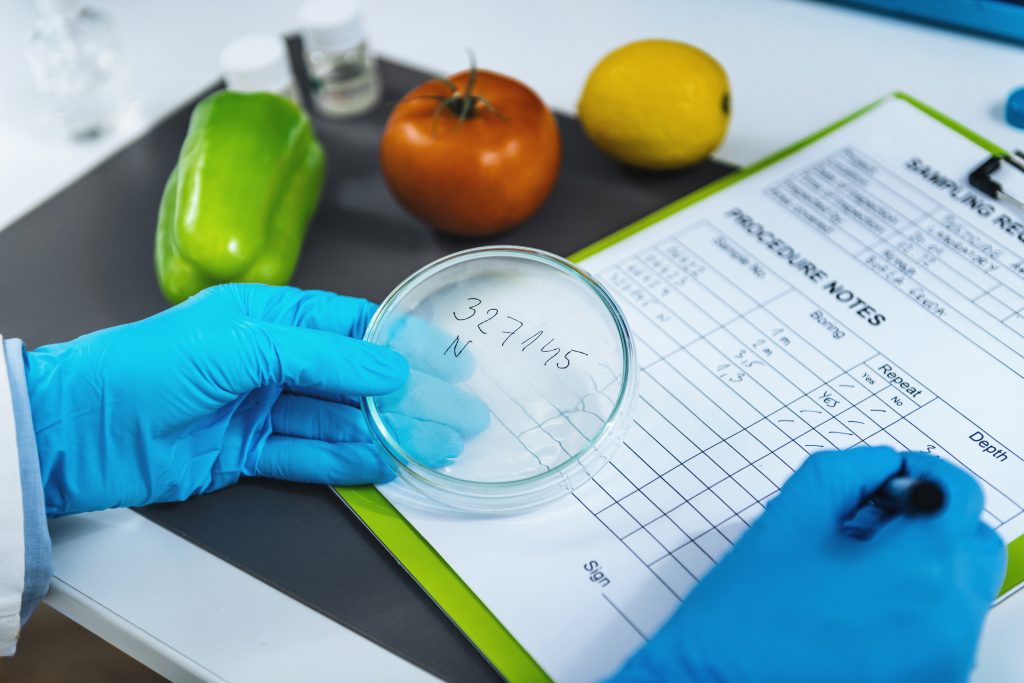
A pack test fills production-intent cans with your actual formula, stores them under controlled conditions, and measures what changes over time. It is the only way to answer this question, and it takes longer than most launch timelines allow for.
- Fill production-intent cans on the liner you are considering, plus controls: a glass control and at least one alternate liner.
- Run accelerated aging at about 50 degrees C for 14 days as a screen. Cornell established an r-squared of 0.793 against room-temperature storage for this protocol, which makes it a good filter and a poor final answer.
- Run parallel real-time storage at 20 degrees C out to 24 to 48 weeks. This is the data you decide on.
- Measure at intervals rather than at the end: dissolved aluminum by ICP, pH, titratable acidity, dissolved oxygen, sensory and hydrogen sulfide where sulfites are present, and enamel-rater metal exposure.
- Inspect the neck and dome specifically. Published work found blistering concentrates there rather than distributing evenly across the can wall.
Practically, you get a directional read in three to four weeks and a defensible one in six to twelve months. That gap is exactly why pilot production matters, and why a compatibility test belongs alongside your pilot batch rather than after your first commercial run. Our guide to beverage testing and quality control covers the wider testing program this sits inside, and how to maximize beverage shelf life covers what to measure and when.
Why Is BPA-NI Not a Specification?
BPA-NI tells you what a coating doesn’t contain and says nothing about what it’s made of instead.
Cornell’s food science group made this point directly in a June 2025 note on can liner terminology, concluding that the terms Gen II, BPA-NI and hard-to-hold are ambiguous and do not guarantee performance. Their case study documents a supplier that switched from a non-BPA epoxy to an acrylic while still meeting the terms of the contract. Both are BPA-NI. Only one of them is safe for a sulfited product.
Write the specification around the coating chemistry. Name the coating class and, where possible, the specific coating product. Ask for written confirmation of the clearance under 21 CFR 175.300 for your food type and condition of use. Ask to be notified in writing before any coating change, and treat a change as a trigger for retesting. This is a procurement risk as much as a technical one.
How MetaBrand Helps with Can Liner Compatibility
Most brands discover the liner question after their first canned run, which is the expensive order to discover it in. MetaBrand Corp builds it into formulation. Our beverage formulation services establish the properties that decide the coating class, including titratable acidity rather than pH alone, sulfite level, alcohol content, flavor-oil load and intended ambient shelf life, then map those against the coating classes your can supplier can deliver.
That comes from more than 10 years and over 150 brands, in an FDA-registered and TTB-approved facility in Edison, New Jersey, across energy drinks, hard seltzers, RTD cocktails, functional beverages, kombucha and cannabinoid drinks. Those are exactly the categories where the liner question bites, because they combine high acid load with long ambient shelf life and, increasingly, with actives that can adsorb to the coating.
We will also tell you when the upgrade is not worth it. A laminated polyester can costs more per unit and it is the right answer for a sulfited cider or a long-dated cannabinoid drink. It is usually the wrong answer for a standard carbonated soft drink at pH 3.2 that turns in 90 days. Overspecifying a liner is a quieter mistake than underspecifying one, and it still costs money on every case. If a can is the right container for you at all, premium beverage can packaging solutions and beverage can sizes cover the rest of that decision.
Frequently Asked Questions
No published pH number defines a hard cutoff. The published research points to total organic acid load as a stronger predictor than pH. Titratable acidity above roughly 6 g/L in lactic equivalents is the threshold with real evidence behind it.
At typical formulation levels, the salt isn't the problem. Cornell researchers tested chloride from 0 to 250 mg/L and found no meaningful corrosion effect. The chloride effect that gets cited comes from a study using 1 molar potassium chloride, which is roughly a hundred times a beverage concentration. The real risk in a hydration drink is the citric and malic acid load and a long ambient shelf life.
No. Cornell's food science group concluded in 2025 that Gen II, BPA-NI and hard-to-hold are ambiguous terms that do not guarantee performance, and documented a supplier switching from a non-BPA epoxy to an acrylic while still meeting contract terms. Specify the coating class and product, and require written notice of any change.
About three to four weeks for a directional read and six to twelve months for a defensible one. Accelerated aging at 50 degrees C for 14 days is a validated screen, with an r-squared of 0.793 against room-temperature storage, which makes it useful for ruling options out and unreliable for signing off. Real-time storage out to 24 to 48 weeks is the data you decide on.
Often yes, with the right coating class. Cornell found ethanol between 4.2 and 10 percent had no meaningful corrosion effect on its own. The complication in spirits-based RTDs is usually the combination of alcohol, acid and flavor oils rather than the alcohol alone, so test the actual formula.
aTULC is a laminated polyester can, where film is applied to the coil before the can is formed rather than sprayed into a formed can, which gives more uniform coverage. The manufacturer claims more than double the shelf life in vulnerable categories and under 2 percent cannabinoid potency loss over 20 weeks. It earns its premium on sulfited, high-acid and long-dated products, and generally does not on a fast-turning standard soft drink.
Usually dissolved aluminum from liner corrosion, driven by your acid load or your sulfites. It typically shows up weeks or months after fill, which is why it surfaces in distribution rather than in QC. In sulfited products, hydrogen sulfide from a liner reaction produces a separate and more sulfurous off-note.
The published evidence says the mineral content itself is not the deciding factor at beverage concentrations. What usually changes alongside an electrolyte addition is the acid system used to make it palatable, and that acid load is what drives the liner decision. Test the finished formula rather than reasoning from the ingredient list.