
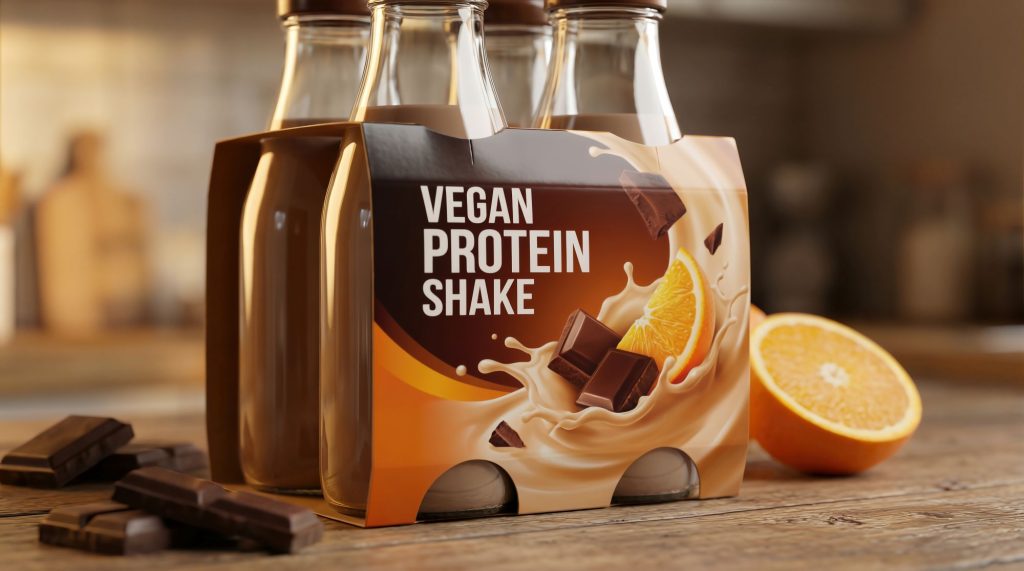
You have a protein RTD concept you believe in. Maybe it’s a clear, sparkling protein water aimed at the gym-and-coffee crowd. Maybe it’s a creamy 30-gram meal-replacement for GLP-1 users. Either way, somewhere between the idea and the filled bottle on a retail shelf, a hundred technical decisions sit waiting, and picking the wrong few stalls the whole project.
Manufacturing a ready-to-drink (RTD) protein beverage in 2026 is not the same project it was even three years ago. Protein loads are higher. Consumer expectations for taste and clarity are tougher. Ingredient costs are moving. And the gap between brands that scale cleanly and brands that get stuck in pilot is, more than anything else, a gap in manufacturing knowledge.
Direct answer. Manufacturing an RTD protein drink in 2026 means making four decisions correctly before you commit to a co-packer. You choose a protein system (whey, plant-based, or a blend) that matches your pH and processing path; you control sedimentation through ingredient hydration, stabilizers, and homogenization; you set a realistic protein target (most successful retail SKUs land between 15 and 30 grams per bottle); and you design taste around the protein, not in spite of it. Getting these four right is the difference between a smooth pilot-to-production scale-up and a costly reformulation cycle.
Why RTD Protein Drinks Are Worth the Manufacturing Complexity
The economics are the reason this category is crowded, and they are the reason the complexity is worth solving. According to Mordor Intelligence’s 2026 industry report, the global RTD protein beverages market is valued at USD 2.11 billion in 2026 and projected to reach USD 3.06 billion by 2031, a compound annual growth rate of 7.7 percent. North America held a 38.4 percent revenue share in 2025, which means the U.S. opportunity is the single largest regional prize on the board.
But the same report flags a manufacturing-side reality that founders sometimes underestimate: raw material price volatility. The USDA projects the all-milk price at USD 21.65 per hundredweight in 2026, and that price ripples directly into whey protein concentrate, whey protein isolate, and milk protein concentrate costs. Brands that lock in stable protein sourcing early have a structural advantage over brands that pivot suppliers mid-launch.
From our experience working with more than 150 brands over the past decade, the founders who succeed in this category treat manufacturing as a strategic decision, not a downstream operational step. The earlier you bring a manufacturing partner into the formulation conversation, the fewer surprises hit you at scale. If you’d like to walk through your protein build with our team, we can show you what those decisions look like in practice.
The First Decision: Choosing the Right Protein Source
Direct answer. The right protein source for your RTD depends on three things: your target consumer (athlete, mainstream wellness buyer, or plant-based shopper), your processing path (UHT, retort, hot-fill, or aseptic), and the sensory profile you want (clear and refreshing, or creamy and indulgent). There is no universally right protein. There is only the right protein for your specific product.
Whey Protein (Isolate, Concentrate, Hydrolysate)
Whey is the gold standard for sports and active nutrition RTDs. It carries a complete amino acid profile, fast absorption, and a clinical record that consumers and athletes recognize. Whey protein isolate (WPI) is the workhorse for clear, low-pH protein waters. Whey protein concentrate (WPC) is more common in creamy, neutral-pH shakes. Whey hydrolysate is faster-digesting and lower-allergen, used in premium recovery products.
The trade-off is real. Whey proteins are heat-sensitive. Peer-reviewed dairy science research confirms that most whey proteins are irreversibly denatured during traditional high-temperature processing, which is exactly the processing path most shelf-stable RTDs require. The good news: ingredient suppliers have developed pre-acidified and microparticulated whey systems specifically engineered for high-protein RTD applications. Choosing the right whey grade matters as much as choosing whey itself.
Plant-Based Proteins (Pea, Soy, Oat, Blends)
Pea protein has emerged as the most-used plant-based option for RTDs. It’s allergen-friendly, non-GMO, and aligns with the clean-label movement. Soy still has a cost and amino acid profile advantage, but it carries allergen labeling and consumer-perception challenges. Oat protein delivers texture and mouthfeel that approaches dairy, with sustainability credentials that resonate with younger buyers.
The honest tradeoff with plant proteins: they introduce sensory and stability challenges that whey does not. Plant proteins can carry beany, earthy, or astringent off-notes. They can sediment and produce gritty mouthfeel at high inclusion levels. And they often require more aggressive masking, stabilization, and processing finesse. The technology has improved dramatically; modern, finely-milled pea protein isolates and engineered hydrolysates have closed much of the gap with whey. But anyone who tells you plant protein drops one-for-one into a whey formula is selling you a problem.
Blended Protein Systems
Blends are where smart brand strategy meets smart formulation. A whey-and-casein blend gives you fast-and-slow amino acid release for sustained satiety, popular in meal replacement positioning. A whey-and-collagen blend supports beauty-and-wellness positioning without sacrificing muscle-recovery messaging. A pea-and-rice blend completes the amino acid profile for plant-only products. The right blend lets you tell a more nuanced consumer story, but it also multiplies the formulation variables you have to control.
| Protein System | Strengths | Watch-outs | Best fit |
|---|---|---|---|
| Whey (WPI, WPC, hydrolysate) | Complete amino acid profile, fast absorption, established sports nutrition credibility, clean taste at low pH | Heat-sensitive (denaturation risk), dairy allergens, astringency at low pH | Sports nutrition, clear protein waters, mainstream shake formats |
| Plant-based (pea, soy, oat, hemp) | Allergen-friendly, sustainability story, clean-label fit, growing consumer demand | Off-notes (beany, earthy), sedimentation risk, gritty mouthfeel at high loads, requires more masking | Plant-forward brands, wellness positioning, sustainability-led launches |
| Blends (whey-casein, whey-collagen, pea-rice) | Tailored functional benefits, sustained release, completed amino acid profiles | Higher formulation complexity, more variables to control, costlier R&D | Meal replacement, beauty-and-wellness, premium positioning |
For a deeper look at how protein system choices flow into the rest of a build, see our guide on mastering beverage formulation from idea to production.
Solving Stability and Sedimentation Before You Scale
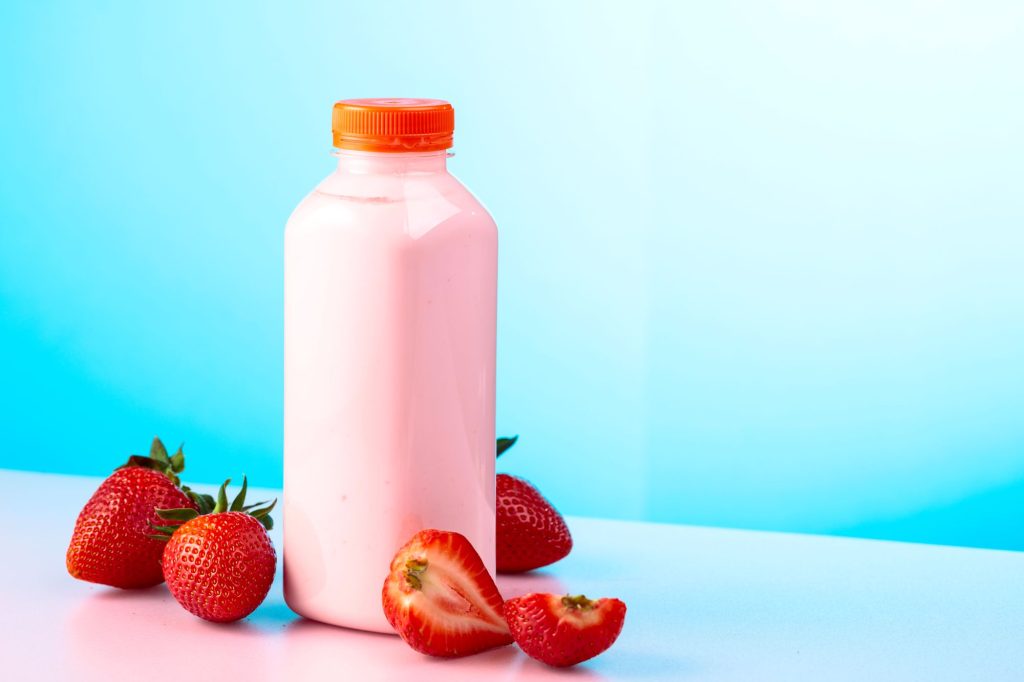
Direct answer. Sedimentation in an RTD protein drink is caused by incomplete hydration, mismatched pH, inadequate stabilization, or insufficient homogenization. You solve it before scale-up, not after, by pre-hydrating proteins, dialing pH away from the protein’s isoelectric point, selecting the right hydrocolloid system, and pressure-homogenizing at the right specification. Trying to fix sedimentation at the co-packer is the most expensive place to find it.
Here is what most founders don’t realize until it’s already happened: a formula that looks beautiful in a benchtop kitchen blender will often fall apart after 90 days on a warehouse shelf in Phoenix. The reason is that pilot batches don’t replicate the heat history, shear, and storage conditions of commercial production. This is why MetaBrand insists on pilot-scale stability runs that match your intended processing path before locking a formula. It’s also why “flying through” pilot is one of the costliest mistakes we see.
The Four Levers That Control Stability
- Protein hydration. Milk and plant proteins both require time and the right temperature to fully hydrate before other ingredients enter the formula. Skipping this step (or rushing it) is the single most common root cause of sedimentation we see when we audit failed formulations. The fix is process discipline, not a new ingredient.
- pH control. Whey proteins remain highly soluble at low pH (typically below 3.5), well away from their isoelectric point; this is why clear protein waters live in that acidic zone. Plant proteins behave differently, often most stable around neutral pH. The wrong pH for your chosen protein guarantees stability problems no stabilizer can fully rescue.
- Stabilizer and hydrocolloid selection. Pectin, gellan gum, xanthan, microcrystalline cellulose (MCC), and carrageenan each solve different stability problems. The right system depends on your protein, pH, processing, and packaging. There is no universal stabilizer, and stacking too many is its own problem.
- Homogenization and processing. High-pressure homogenization (typically 2,000 to 5,000 psi for protein beverages) reduces particle size and emulsifies fats so suspension holds across shelf life. The pasteurization or UHT path you choose must be matched to the protein system; a profile that protects whey at low pH will not protect a neutral-pH plant-protein system.
How Much Protein Can You Realistically Pack into an RTD Bottle?
Direct answer. Most successful retail RTD protein drinks land between 15 and 30 grams of protein per bottle. A handful of ultra-filtered milk protein products push to roughly 42 grams, but those are exceptions that rely on specialized ingredient technology. Above roughly 10 percent protein by weight, formulation complexity, viscosity, and processing cost increase sharply, and so does the risk of off-notes, chalky mouthfeel, and stability failure.
Walk down the protein RTD aisle in any U.S. retailer in 2026 and you’ll see a recognizable distribution: clear protein waters at 15 to 20 grams, mainstream protein shakes at 20 to 30 grams, performance and meal-replacement positioning at 30 to 42 grams. That distribution is not accidental. It is what current ingredient and processing technology makes economically and sensorially viable at retail.
The honest engineering reality: every additional gram of protein above the 30-gram threshold makes the product harder to make taste good, harder to stabilize, harder to pour, and more expensive per bottle. Brands chasing higher protein claims for marketing reasons sometimes ship products that win the label race and lose the repeat-purchase race. From our experience, the brands that win sustainably are the ones who set a protein target that matches their consumer’s actual usage occasion, not the highest number they can technically achieve.
Designing Taste Around the Protein, Not in Spite of It
Whey carries dairy notes and astringency at low pH. Plant proteins bring earthiness and bitterness. Both interact with sweeteners, acids, and flavor systems in ways that are not predictable from your last beverage project. The brands that nail taste in this category treat flavor as a formulation discipline, not a top-coat applied at the end.
Three practical things we walk clients through during formulation:
- Choose acidulants intentionally. A blend of citric, malic, and phosphoric acid often outperforms any single acid in a whey RTD, balancing tartness and reducing astringency. The acid system is not a detail; it is the structural backbone of how your protein tastes.
- Use natural flavor maskers when appropriate. Cocoa, coffee, and dark fruit flavors are forgiving with both whey and plant proteins. Citrus, vanilla, and lighter floral profiles are demanding. If you’re early in development and want a faster win, the heavier flavor lanes give you more room to iterate.
- Build sweetness in layers. Stevia and monk fruit alone often produce off-finishes in protein matrices. Pairing high-intensity sweeteners with a small amount of allulose, sucrose, or fruit-derived sweeteners typically delivers a cleaner sweetness curve without sending sugar grams off the label.
The RTD Protein Manufacturing Process, Step by Step
Direct answer. An RTD protein drink moves from formulation to filled bottle through seven distinct manufacturing stages: water treatment, protein hydration, ingredient blending, homogenization, thermal processing, filling, and packaging quality control. Each stage has decision points that affect cost, shelf life, and sensory outcome.
- Water treatment. Reverse osmosis or carbon filtration removes contaminants that would otherwise interact with proteins and flavors. Water quality is the unsung variable behind a surprising number of taste complaints.
- Protein hydration. Proteins are dispersed in warm water and allowed time to fully hydrate. This step is the difference between a smooth product and one that separates on shelf.
- Ingredient blending. Sweeteners, acidulants, flavors, vitamins, minerals, and stabilizers are added in the correct order. Order matters: a wrong sequence can drive proteins past their isoelectric point and cause irreversible aggregation.
- Homogenization. High-pressure homogenization reduces particle size, emulsifies fats, and stabilizes the system for shelf life.
- Thermal processing. The system is heated to deliver microbial safety and shelf stability. Options include HTST pasteurization, UHT, retort, hot-fill, and aseptic processing. The right path depends on your protein, pH, and target shelf life. For brands navigating non-alcoholic processing decisions in particular, our non-alcoholic beverage manufacturer overview walks through how thermal path choices flow into category positioning.
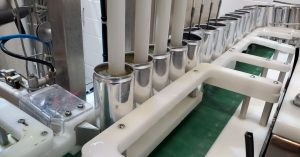
- Filling. Hot-fill, cold-fill, or aseptic filling lines are chosen based on the thermal path and packaging format (PET bottle, aluminum can, Tetra carton, glass).
- Packaging quality control. Every batch is tested for protein content, pH, microbiological safety, sensory profile, and visual stability. Brands that skimp here typically catch defects in distribution rather than at the plant, which is the wrong order to find them.
How MetaBrand Helps You Manufacture an RTD Protein Drink
MetaBrand is a beverage formulation and contract manufacturing company based in Edison, New Jersey. The facility is FDA-registered and TTB-approved. Over more than 10 years and 150+ brands, we have walked founders and brand teams through exactly the decisions outlined above. We don’t own brands of our own, which means we have no competing priority to your project.
Our three-step process is built so you don’t repeat the most expensive mistakes in this category:
- Audit: Schedule a Free Formula Audit. We learn your vision, target consumer, protein target, processing constraints, and budget. If your current formula has stability or sensory problems, we diagnose them honestly.
- Develop: We Develop Your Formula and Manufacturing Plan. Custom formulation, pilot testing on processing equipment that matches commercial scale, cost of goods sold (COGS) analysis, and a production roadmap. You see the real numbers before you commit.
- Launch: Launch with Confidence. Full manufacturing, quality control, and scaling support from pilot through full production. We tell you the hard truths along the way (some flavors will not survive UHT; some protein loads will not hit your COGS target); that is the job.
If you want to walk through your protein build with our team, including realistic protein targets, stabilizer options, and what your COGS will look like at scale, that conversation is free.
Frequently Asked Questions
Most successful retail RTD protein drinks land between 15 and 30 grams of protein per bottle. Above 30 grams, formulation complexity, viscosity, and processing cost increase significantly. A few specialized products (ultra-filtered milk protein formats) push to roughly 42 grams, but those rely on proprietary ingredient technology and premium pricing. The right protein target is the one that matches your consumer’s actual usage occasion, not the highest number you can technically achieve.
Whey is generally more forgiving to formulate at high protein loads and delivers a cleaner taste in low-pH (clear) RTDs. Plant-based proteins are harder to stabilize, more prone to off-notes, and require more aggressive masking, but they win on allergen profile, sustainability messaging, and consumer perception. Neither is universally better; the right choice depends on your consumer, processing path, and brand position.
Sedimentation is almost always caused by one (or a combination) of four root causes: incomplete protein hydration, wrong pH for your protein system, the wrong stabilizer choice, or insufficient homogenization pressure. Fixing sedimentation after a product is in the market is far more expensive than catching it during the pilot. A proper pilot-scale stability run on commercial-spec equipment will surface most stability problems before they reach a co-packer.
A realistic timeline from formula concept to commercial production runs 6 to 12 months, depending on complexity. Clear-protein formats with novel ingredients can take longer because they require more iteration on stability and taste. Founders who try to compress this timeline below 6 months typically pay for it in reformulation cycles after launch.
MOQs vary widely by facility, packaging format, and processing path. Aseptic and UHT lines often have higher MOQs (tens of thousands of units per run) because of changeover economics. Hot-fill and cold-fill lines can be more flexible. The smartest move is to ask about MOQs alongside packaging and processing decisions, not after, because the three are linked.
Yes. Any beverage produced for commercial U.S. distribution must be made in a facility that is registered with the FDA and operates under current Good Manufacturing Practice (cGMP) and Preventive Controls for Human Food (21 CFR Part 117) standards. MetaBrand’s Edison, NJ facility is FDA-registered. If a manufacturing partner can’t answer FDA-registration and Preventive Controls questions directly, that is a flag worth taking seriously.
Run a pilot batch on equipment that genuinely matches the commercial processing path you intend to use. A kitchen-scale or lab-bench batch tells you what the formula could do; a properly-specified pilot tells you what it will do at scale. Stability testing should run for the full intended shelf life, in conditions that include accelerated heat exposure.
Ready to Build Your RTD Protein Drink?
The brands that win in this category in 2026 are not the ones with the loudest claims. They are the ones who make four manufacturing decisions correctly, in the right order, with a partner who tells them the truth. If that sounds like the level of discipline you want for your project, we should talk.