
Sustainability used to be a differentiator reserved for the most eco-friendly brands. Today, sustainability has become a baseline expectation for businesses everywhere.
Beverage brands specifically are under growing pressure to make packaging decisions that reduce environmental impact without disrupting production or eroding margins. For many founders, this creates a tension between what sounds good in theory and what actually works in manufacturing.
As beverage formulation and manufacturing experts, we have some insight into how packaging decisions affect supply chain, manufacturing capabilities, cost targets, and long-term scale.
This guide breaks down what sustainable packaging means in a beverage manufacturing context, explores common material options, and outlines best practices brands should consider before committing to specific packaging.
What Does “Sustainable Packaging” Mean in the Beverage Industry?
Sustainable packaging refers to packaging choices that reduce environmental impact across their lifecycle, from material sourcing and production to transportation, recyclability, and end-of-life disposal.
In the beverage industry, sustainability is typically evaluated through factors such as:
- Recyclability and reuse rates
- Use of recycled or renewable materials
- Energy and resource use during production
- Transportation efficiency and weight
- Compatibility with existing recycling infrastructure
Clearly, sustainable packaging is not one-size-fits-all. A package that performs well environmentally in one supply chain or region could present challenges in another.
So let’s talk about your options…
Common Sustainable Packaging Options for Beverages
Recycled PET (rPET)
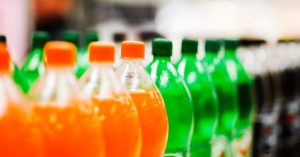
Recycled PET is one of the most widely adopted sustainable packaging materials in beverages, particularly for ready-to-drink products.
Manufacturing considerations:
- Often compatible with existing PET bottling lines
- Availability and pricing can fluctuate based on recycled material supply
- Quality consistency can vary depending on sourcing
For brands, rPET can offer a lower barrier to entry compared to newer materials, but supply chain reliability should be evaluated as early as possible.
Glass Bottles
Glass has always been a premium and sustainable option due to its recyclability and inert properties.
Manufacturing considerations:
- Heavier weight increases transportation emissions and costs
- Requires compatible bottling equipment and handling processes
- Breakage risk must be accounted for in logistics and warehousing
Glass works well for certain beverage categories, but its sustainability benefits depend heavily on reuse rates and transportation distances.
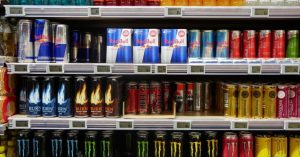
Aluminum Cans
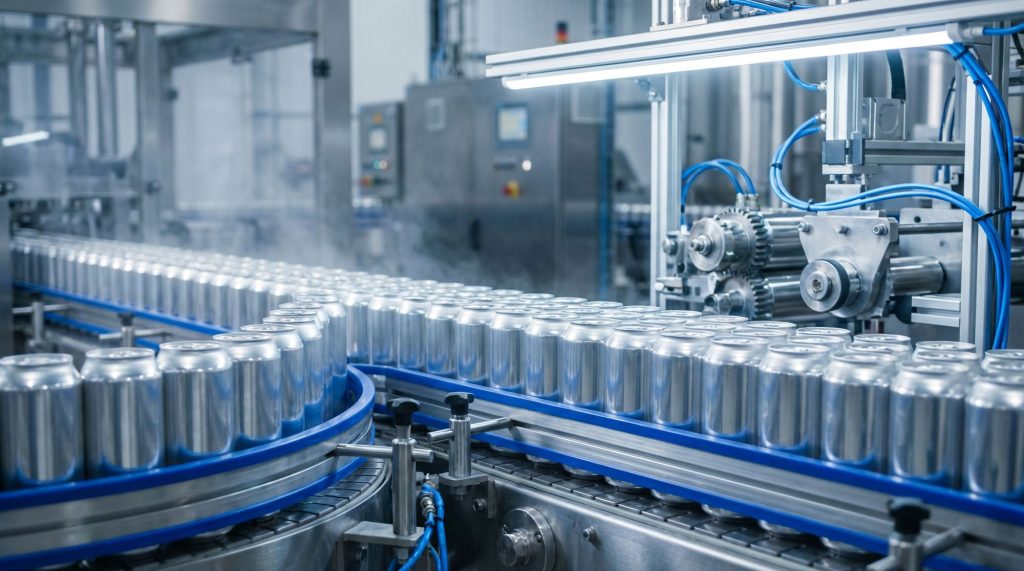
Aluminum cans are widely recycled and increasingly popular across beverage brands. And they’re everywhere for a reason. They’re lightweight and efficient to transport, but there are some considerations to keep in mind.
Manufacturing considerations:
- Requires specialized canning lines
- Can availability and minimum order quantities may affect cash flow
From a manufacturing standpoint, cans strike a balance between sustainability, scalability, and cost when supply is available.
Plant-Based and Alternative Materials
Plant-based plastics and alternative materials continue to emerge, offering potential environmental benefits.
Manufacturing considerations:
- Limited compatibility with existing filling lines
- Variable shelf-life performance
- Recycling infrastructure may be inconsistent or unavailable
These materials may work well for specific brand missions, but they require careful vetting to avoid unintended tradeoffs. And because they’re still evolving, it’s important to understand their effectiveness, shelf life, and scalability before committing.
How Sustainable Packaging Impacts Manufacturing
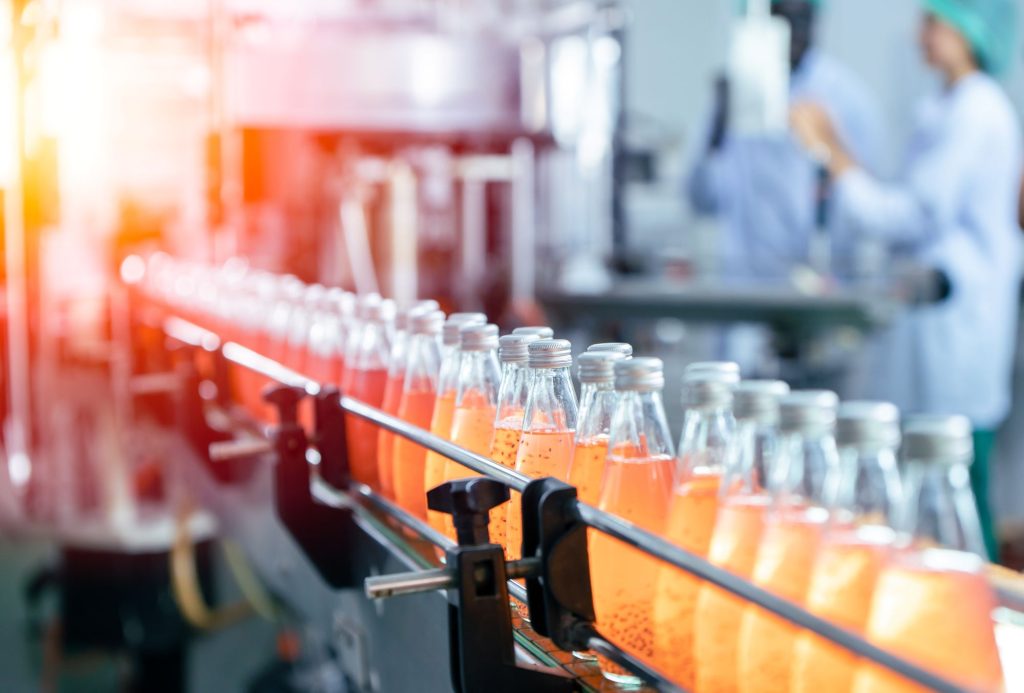
Packaging decisions affect manufacturing operations in real, tangible ways. So it’s important to understand those impacts. These include:
Supply Chain Complexity
Sustainable materials could have longer lead times or limited suppliers.
Cost Variability
Pricing of beverage industry sustainable packaging can fluctuate based on demand and availability.
Line Changeovers
Switching packaging formats may require equipment changes or even new production partners.
Production Efficiency
Some materials move faster or slower through filling lines.
Brands that evaluate sustainability without considering manufacturing realities often encounter delays, added costs, or compromised consistency.
Best Practices for Choosing Sustainable Packaging
If you’re considering sustainable packaging materials for your beverage brand, here’s a few things to gut-check while weighing your options:
Start with Manufacturing Compatibility
Before committing to a packaging format, confirm it works with your intended production partners and volumes.
Model Costs at Scale
A sustainable option that works financially at small volumes may not scale efficiently. Cost modeling should include packaging, freight, and storage.
Avoid Over-Promising
Claims around sustainability should align with what the packaging actually delivers—and what regulations allow you to say.
Build Flexibility into Early Decisions
Early-stage brands benefit from packaging choices that allow for iteration as the product and distribution footprint grow.
Where Manufacturing Expertise Adds Value
Sustainable packaging decisions sit at the intersection of formulation, manufacturing, supply chain, and brand strategy. Without experienced guidance, brands risk optimizing for one area at the expense of others.
Working with partners who understand how packaging choices affect production timelines, costs, and scalability can help brands make decisions that hold up beyond the first production run.
Remember: sustainable packaging in the beverage industry is about more than which material you like best. The most effective packaging choices balance environmental impact with manufacturing feasibility, cost control, and long-term growth.
Brands that approach sustainability with a clear understanding of production realities are better positioned to build products that last.
Thinking through sustainable packaging for your beverage?
We’re MetaBrand — a beverage formulation and manufacturing partner that helps brands translate ideas into production-ready products, without losing sight of cost, scalability, or brand promise. We’ve produced some of the most recognizable brands in the industry, including Poppi, Gorgie, Jones Soda, Joel Gott Wines, and Loverboy, among many others.
We help beverage brands evaluate packaging options through a manufacturing lens, so sustainability decisions work even as you scale. Contact our team to learn more and start a conversation.